BOOKS AND NOVELS
In a world where the sacred is no longer recognized and science no longer holds the answers, Ancode’s novel Uncode rises like the cry of a vigilant mind—breaking through the walls humanity has built around its consciousness to question everything: religion, existence, memory, identity, and even the mind itself. Uncode is not a novel in the traditional sense; it does not follow a single protagonist but instead draws a mental map in which object and symbol, memory and concept, silence and scream alternate in constant tension. Across 666 pages, multiple voices intertwine, and internal dialogues collapse to reveal a philosophical-scientific symbolic system that engages with the reader not to guide—but to unbalance.
‘Uncode’ explores the architecture of human thought — where science dismantles faith, and reason rebuilds the universe.
Available now in English, Arabic, and soon Spanish.
Uncode – Awakening
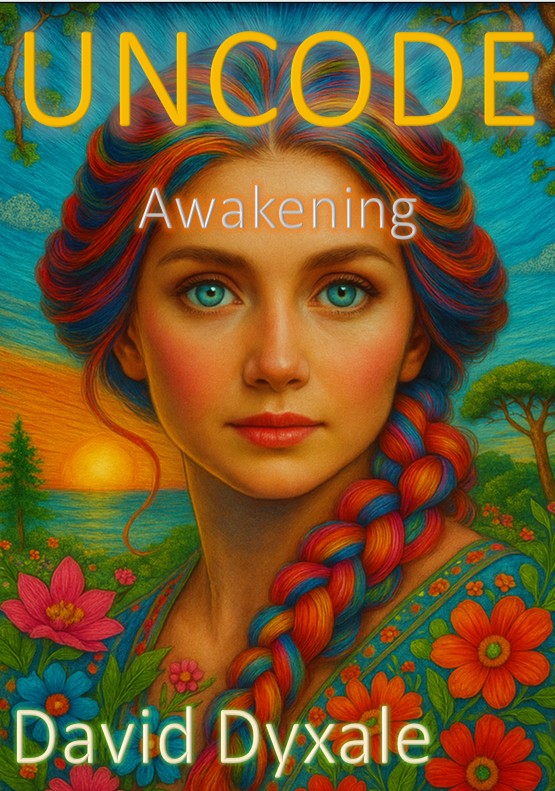
Uncode – Awakening
أنكود – الصحوة – الطبعة الثانية
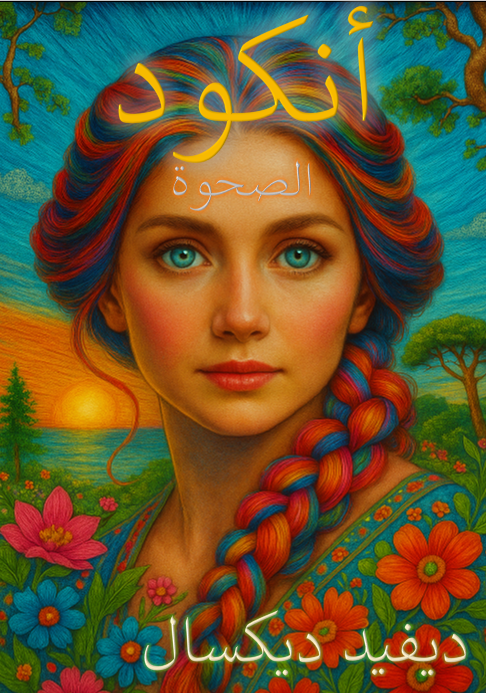
أنكود – الصحوة – الطبعة الثانية
Synopsis of the novel “Encode” – a philosophical narrative
By David Dyxale
At the center stands Bellona, leading us through her perceptual collapses as a gateway into a web of conceptual characters: Odin, representing the abstract mind; Osiris, born from the memory of ancient humanity; and Asmodeus, the bystander in which the system collapses without collapsing itself. All unfolds within a vast metaphysical theater: C12, the contemplative council of meaning; C15, the council of contradiction and confrontation; and the Pantheon, a superhuman cognitive force that judges the symbols and voices humanity once worshipped. The novel does not attack religion—it is judged by the very mechanism of faith. It does not reject memory—it dismantles it piece by piece. Written in philosophical Arabic, the text carries the rhythm and tone of a sacred narrative, only to shatter it from within.
Uncode belongs to a new genre of literature known as unfiction—a form that does not tell but deconstructs, does not reassure but disturbs, does not seek the reader but waits for them at the end. It is not a novel to read; it is a trial in which the reader stands accused, only to be left without judgment. This work marks the first in a four-part series, with each installment to be released annually, guiding the reader through the gradual collapse of the cognitive system toward a new construction of consciousness—an ending that is not an answer but a reprogramming of the human being.
Through its philosophical and symbolic depth, and its daring deconstruction of religion, identity, and reason itself, Uncode is destined to be transformed into a visual experience—whether as a philosophical mini-series or an unconventional cinematic film. Preparations for translation into several languages are already underway to present it on international cultural and cinematic platforms. Behind this monumental work stands one man—an author with no wealth, no publisher, and no academic backing, but with an idea born from thirteen years of thought, writing, and inner struggle. Today, he seeks neither fame nor fortune—only to see his novel printed in the hands of Arab readers as an intellectual bomb whose impact cannot be avoided.depth and